

Abstract
Ball Screw is a common mechanical transmission component widely used in various mechanical devices. This article mainly discusses the operating principle of the roller screw, including its structure, modes of motion, and related kinematic and dynamic characteristics.
Introduction
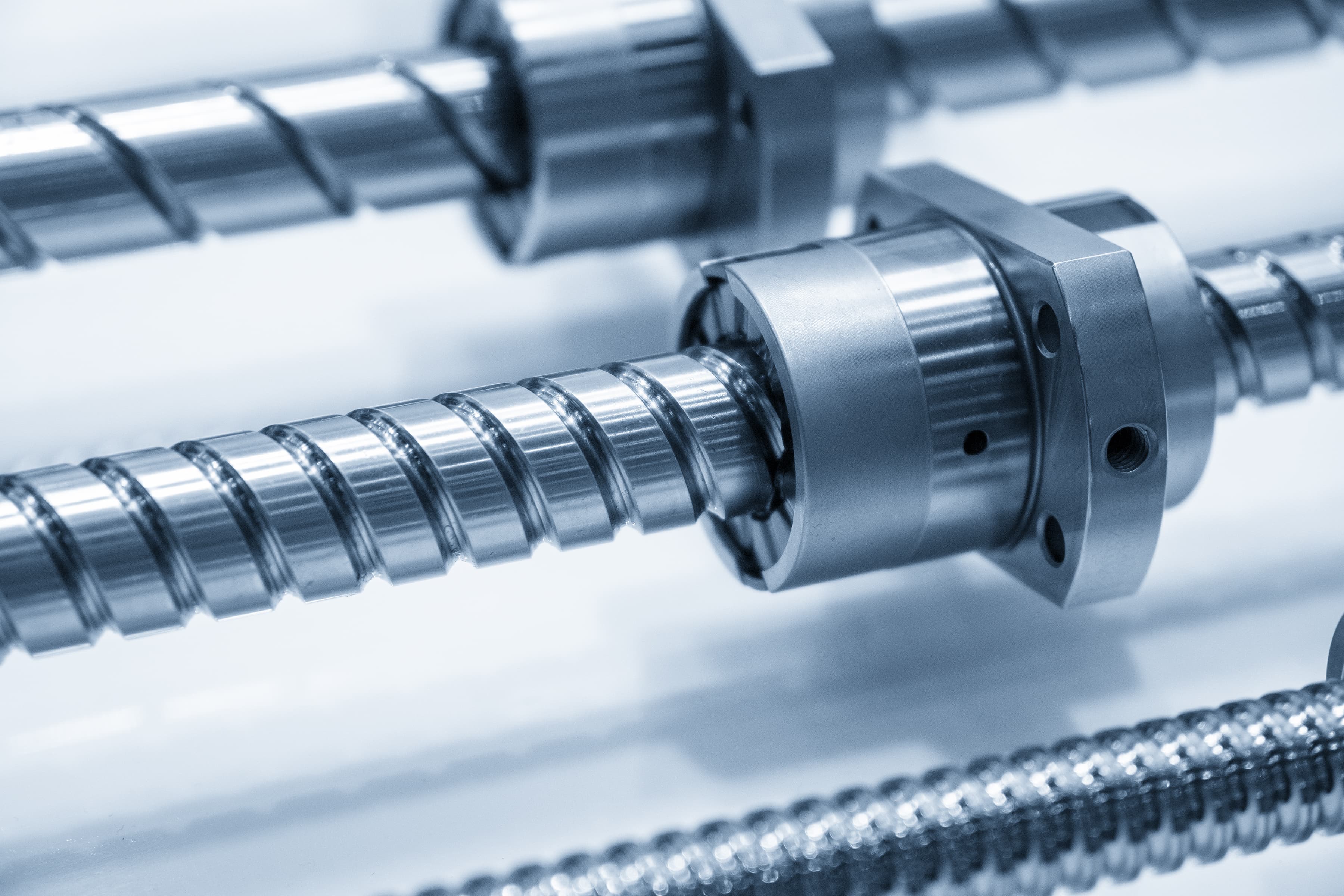
Ball Screw is commonly used to convert rotary motion into linear motion or linear motion into rotary motion. Its structure consists of components such as the screw, balls, and nut. The screw is a cylindrical body with helical grooves on its outer surface, used for transmitting torque. The nut is the component that matches with the screw and has an internal channel that corresponds to the screw's threads. The balls are positioned between the screw and the nut, enabling the transmission and conversion of energy through their motion.
Modes of Motion
It can be divided into two types: rotary motion and linear motion. In rotary motion, the screw rotates through a driving device, while the balls roll along the helical grooves, thus converting the rotary motion into linear motion. In linear motion, the screw remains stationary, and the roller screw rolls through external forces, converting the linear motion into rotary motion.
Kinematic Characteristics
These include the screw pitch, ball diameter, and screw inclination angle. The screw pitch refers to the distance between adjacent threads on the screw, determining the linear displacement produced per revolution. The ball diameter affects the motion stability and load-carrying capacity of the balls within the screw grooves. The screw inclination angle refers to the angle between the screw axis and the horizontal plane, influencing the contact behavior and motion efficiency between the screw and the nut.
Dynamic Characteristics
These include motion resistance, efficiency, and transmission accuracy. Motion resistance is mainly caused by rolling friction and rolling resistance of the balls within the screw grooves, affecting the load-carrying capacity and energy consumption of the screw. Efficiency refers to the energy utilization efficiency during the process of energy transmission and conversion in the screw, which is influenced by the structure of the roller screw and operating conditions. Transmission accuracy refers to the ability of the screw pitch and ball diameter to control the screw's motion, affecting positioning accuracy and motion smoothness.
Applications and Optimization
Ball Screw are widely used in fields such as CNC machine tools, robotics, and precision measuring instruments. In design and application, factors such as load capacity, motion speed, positioning accuracy, and service life of the screw need to be considered. By optimizing the structure and motion parameters of the roller screw, its performance can be improved to meet different application requirements.

Conclusion
As a common mechanical transmission component, understanding the operating principle of the roller screw, including its structure, modes of motion, and related kinematic and dynamic characteristics, helps in optimizing the design and enhancing its performance. Future research can focus on further improving the load capacity, motion smoothness, and service life of roller screws to meet the evolving needs in mechanical engineering applications.


