

What Is the Difference Between T5/T10 and AT5/AT10? Understanding Stress Strength and Backlash Differences Through Tooth Geometry
Has your newly assembled machine experienced abnormal wear or even tooth skipping (ratcheting) on its timing belt within less than a month of operation?
This is a common pain point for many mechanical engineers when designing high-speed, high-frequency reversing applications. Even when motor torque calculations seem correct and standard T10 timing pulleys are selected, issues such as tooth root shear failure during emergency stops or rapid reversals still occur—or positioning accuracy gradually drifts due to excessive backlash. The problem often lies not with the motor, but with choosing the wrong pulley tooth profile.
Fundamental Differences in Geometry and Load-Bearing Structure
Although both T-series and AT-series belong to trapezoidal tooth profiles, their design philosophies are fundamentally different:
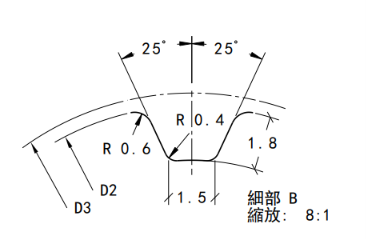
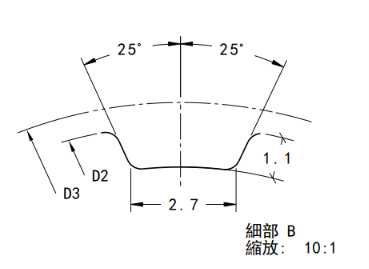
T5 / T10 (Standard Trapezoidal Profile): Designed according to DIN 7721 standards. Featuring relatively thinner tooth roots and shallower tooth depths, they are intended primarily for light-duty conveying and general torque transmission. When subjected to frequent emergency stops or high acceleration, the thinner tooth roots are prone to stress concentration, leading to tooth skipping or shear breakage.
AT5 / AT10 (High-Load Advanced Profile): "AT" stands for Advanced Technology. Pulleys in this series feature significantly thickened tooth root cross-sectional areas and enlarged contact areas between the tooth tip and pulley groove. This markedly enhances tooth root shear resistance, boosting operating torque capacity by approximately 30% to 50% compared to T-series of the same pitch, while effectively absorbing shock loads.
|
Comparison Item |
T5 / T10 Timing Pulleys |
AT5 / AT10 High-Load Pulleys |
|
Tooth Profile Design |
Standard trapezoidal tooth (thin tooth root) |
Reinforced trapezoidal tooth (thickened tooth root) |
|
Torque & Backlash |
Standard torque, larger reversal backlash |
High torque (30%–50% increase), extremely low backlash |
|
Typical Applications |
General conveyors, unidirectional mechanisms |
Frequent forward/reverse movement, multi-axis robotic arms, high-precision linear stages |
Frequently Asked Questions (FAQ)
Q1: Can I directly replace a T5 belt with an AT5 belt on an existing T5 pulley?
A: No. Although both share a pitch of 5mm, the AT series has a different tooth root cross-section and tooth groove geometry. Mixing them will result in improper meshing, severe tooth surface wear, or even binding/jamming. When upgrading or replacing, both the timing belt and timing pulley must be simultaneously replaced with matching AT-series components.
Q2: If the existing equipment lacks sufficient torque capacity, should I upsize from T5 to T10, or upgrade directly to AT5 with the same pitch?
A: Upgrading to AT5 is strongly recommended. Switching from T5 to T10 increases transmission capacity, but it significantly expands pulley diameters and structural space requirements, while the larger pitch reduces transmission smoothness and positioning resolution. In contrast, upgrading to AT5 allows a direct 30% to 50% increase in transmission torque capacity and rigidity without altering overall structural space or center distance, making it the most efficient optimization solution when mechanical space is constrained.
Q3: Why does upgrading to the AT series effectively improve repeat positioning accuracy?
A: To ensure smooth engagement, the T-series incorporates larger tooth groove clearances. Conversely, the AT-series optimizes tooth meshing geometry, significantly reducing mechanical backlash during reverse rotation. In applications involving frequent servo reversals, this drastically minimizes motion lag (hysteresis) and maintains consistent, stable precision.
*Note: The content of this article is based on a specific case study. Actual application results may vary depending on industry characteristics, specification requirements, and operating environments. This content is for reference only.


