

Regular Torque (Trapezoidal) vs. High Torque (Curvilinear) Timing Pulleys: Differences and Practical Selection Guide
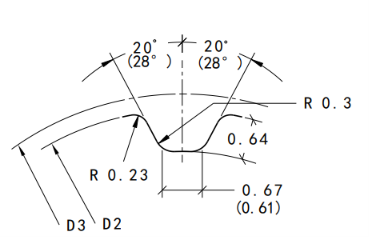
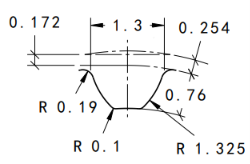
When developing automated equipment, mechanical engineers often face a dilemma: choosing cost-effective regular torque trapezoidal profiles (MXL/XL/L/H) leaves concerns about tooth root damage under high-frequency loads, while upgrading directly to high-torque curvilinear profiles (S-M/P-M) risks over-specification and increased costs.
"What conditions actually warrant an upgrade?" Drawing on years of on-site troubleshooting and practical component selection experience, the Handway technical team walks you through the key selection criteria from a structural physics perspective.
1. Physical Nature of Tooth Profile Structure: Stress Distribution Determines Service Life
The primary cause of drive system failure is stress concentration. The load-bearing mechanisms of these two tooth profiles are fundamentally different:
Regular Torque Series (MXL / XL / L / H): Utilizes a trapezoidal tooth profile design. During rapid starting/stopping or under increased loads, stress concentrates heavily at the root corners. Prolonged operation can easily induce fatigue cracking or even tooth shear. Suitable for continuous constant-speed, medium-to-low load lightweight equipment.
High Torque Series (S2M–S14M / P2M–P8M): Employs a curvilinear tooth profile design (STS/PGGT). The geometric curvature evenly distributes the transmission load across the entire tooth surface, increasing torque capacity by more than two times. Additionally, deeper tooth grooves significantly reduce the risk of "tooth skipping" during rapid motor reversals.
2. Feature Comparison Quick Reference
|
Evaluation Item |
Regular Torque Series (MXL / XL / L / H) |
High Torque Series (S-M / P-M) |
|
Tooth Profile & Stress |
Trapezoidal profile (stress concentrated at root) |
Curvilinear profile (stress evenly distributed across tooth face) |
|
Transmission Performance |
Medium-to-low torque, higher mesh impact |
High torque, high resistance to tooth skipping, low backlash, quiet operation |
|
Common Applications |
Lightweight conveyors, packaging machines, electronic components |
Robotic arms, CNC servo axes, high-frequency reversing mechanisms |
3. Frequently Asked Questions (FAQ)
Q1: My system currently uses an XL belt and frequently experiences tooth skipping. Can I simply replace the belt with an S3M belt?
No. Trapezoidal and curvilinear profiles have completely different tooth shapes and pitches; both the belt and the timing pulley must be replaced together. If drive space is constrained, upgrading to S3M can double the transmission torque capacity and stability within the same belt width.
Q2: What is the difference between S-M and P-M among the high-torque models?
Both belong to the curvilinear tooth family. S-M (STS) features a standard curvilinear tooth profile for smooth, quiet meshing. P-M (PGGT) utilizes a modified flat-top curvilinear tooth profile, providing higher drive rigidity and positioning accuracy, making it ideal for ultra-high-precision servo positioning mechanisms.
Q3: What should be kept in mind when performing Alterations on high-torque timing pulleys?
Because high-torque transmissions handle large loads, bore Alterations (such as shaft bores and keyways) require strict adherence to concentricity and shear strength. This prevents eccentric machining, which can cause uneven belt loading and accelerate tooth surface wear.
More Information


