

How to Choose Between MXL and S2M Timing Pulleys: A Complete Guide from Tooth Profile and Precision Pain Points to Industrial Applications
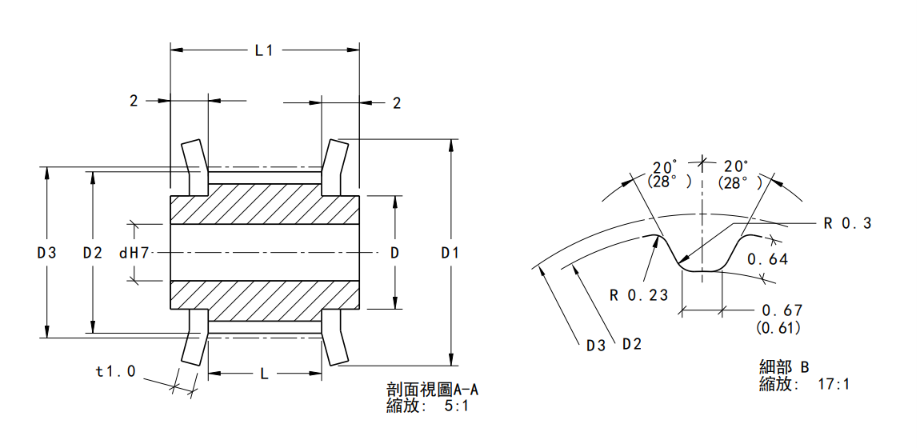
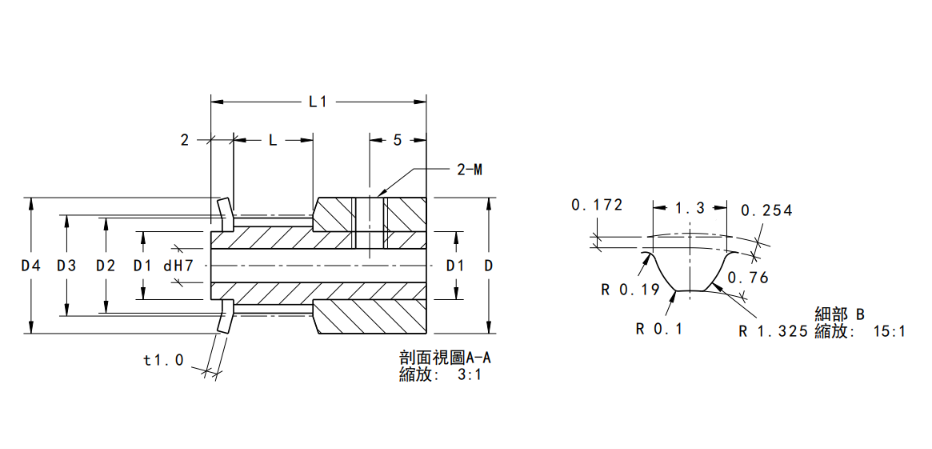
Reversal Micron Errors and Black Dust Wear: Common Pain Points of Selecting the Wrong Tooth Profile
During machine commissioning, engineers often encounter scenarios where the servo motor and linear guide precision are sufficient, yet micro-level drift occurs during high-speed forward/reverse positioning. In more severe cases, continuous operation for 48 hours results in black belt dust and high-frequency noise on the tooth flanks.
The root cause frequently lies in the transmission setup: mistakenly utilizing trapezoidal MXL pulleys for highly dynamic positioning, or overlooking the slight 0.032 mm pitch difference between MXL (Imperial 2.032 mm) and S2M (Metric 2.000 mm) by mixing them, which leads to meshing interference and accelerated wear.
Key Feature Comparison: MXL vs. S2M
| Feature | MXL Timing Pulley | S2M Timing Pulley |
|---|---|---|
| Tooth Profile / Pitch | Trapezoidal / 2.032 mm | STS Curvilinear (Arc) / 2.000 mm |
| Stress & Backlash | Stress concentrates at the tooth root; noticeable reversal backlash | Smooth arc transition; ultra-low backlash |
| Operating Noise | Noticeable tooth-tip impact | Smooth rolling; remains quiet even at >3000 RPM |
| Applicable Equipment | Office automation (OA), packaging & labeling, constant-speed conveyors | Semiconductor inspection, 3D printing, biochemical analyzers |
Industry Applications & Selection Guide
1. MXL Timing Pulleys
MXL features a standard trapezoidal tooth profile with mature manufacturing processes, interchangeable components, and lower procurement costs. It is best suited for unidirectional, constant-speed motion under light loads.
- Office Automation (OA Equipment): Printer paper-feed drives, scanner optical rails, and copier drum mechanisms.
- Light Conveyor & Sorting Modules: Electronic component conveyor belts, labeling feed shafts, and automated packaging sorting mechanisms.
- Optical Sensing & Vending Machines: Unidirectional constant-speed scanning camera modules and merchandise dispensing push-rod mechanisms.
2. S2M Timing Pulleys
The S2M curvilinear tooth profile effectively eliminates stress concentration at the tooth root, drastically reducing impact and backlash during engagement. It delivers superior dynamic response and positioning accuracy.
- 3D Printing & Laser Processing Equipment: X/Y-axis synchronous drives. Minimal reversal backlash completely eliminates surface "ghosting" (ringing) and corner distortion.
- Semiconductor & AOI Optical Inspection: Wafer handling arms and micro-stage alignment mechanisms, offering smooth motion, zero dust wear, and high repeatability.
- Medical & Biochemical Diagnostic Instruments: Automated blood analyzers and micro-pipetting sampling units, satisfying demands for whisper-quiet operation and micro-stepping response at high speeds.
- Micro Servo / Stepper Mechanisms: Compact automation equipment requiring rapid start-stops, frequent reversals, and high dynamic response.
Frequently Asked Questions (FAQ)
Q1: How should I choose the pulley material for high-speed, frequent operation?
For lightweighting, aluminum alloy with hard anodizing (HA, coating hardness >300 HV) is recommended. For high torque or shock loads, medium-carbon steel with electroless nickel plating (EN) is advised to balance mechanical strength with corrosion resistance.
Q2: Will replacing pulleys with S2M help eliminate ghosting or ringing during high-speed direction changes?
Significantly. The S2M curvilinear tooth profile minimizes reversal backlash and tooth impact vibration. It is the standard upgrade solution for eliminating surface ghosting in 3D printing and corner trajectory distortion in dispensing machines.
Q3: How can tooth skipping (ratcheting) be effectively prevented in space-constrained micro-mechanisms?
Ensure that the smaller pulley maintains at least 6 teeth in mesh (TIM) and verify proper belt installation tension. If increasing the tooth count is not feasible, prioritize the S2M curvilinear profile for better wrap engagement or widen the belt to distribute the load.
The content of this article is based on specific case studies. Actual application results may vary depending on industry characteristics, specification requirements, and operating environments. This information is provided for reference only.


